
3-Piece School Uniform Sets: What Parents Should Check Before Buying
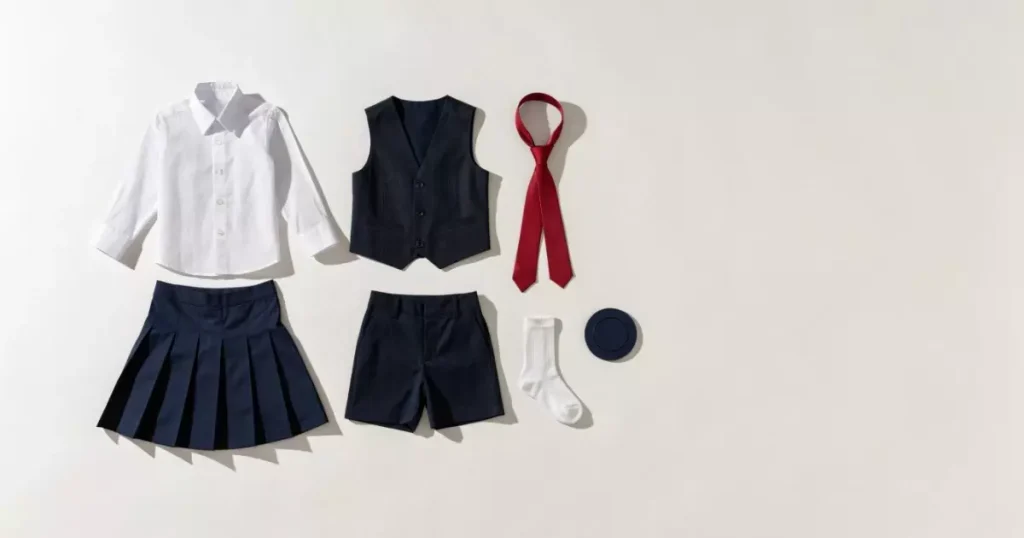
A parent-focused buying guide to 3-piece school uniform sets, covering included pieces, school dress code checks, sizing, fabric and care labels, occasion styling, and value comparison.
A 3-piece school uniform set can look like a simple shortcut: one purchase, three coordinated items, and one less decision before the school year starts. But the phrase does not mean the same thing on every product page. The contents can vary: core garments may be counted differently from accessories such as a tie, socks, or a badge. Before you buy, verify the exact item list, compare it with your school’s dress code, and check size charts, fabric content, care labels, and the return policy. This guide turns listing language into a parent-friendly checklist.
Key Takeaways
- Confirm the exact pieces in the set, including whether the vest is separate or attached and whether a tie, socks, or badge counts toward the advertised three pieces.
- Use your school’s written dress code as the final authority for color, pattern, sleeve length, skirt or shorts length, and accessories.
- Compare your child’s measurements with the retailer’s size chart rather than relying on age labels alone.
- Read fabric content and care instructions for every piece, including accessories that may need different washing.
- Compare total cost, shipping, return policy, and missing pieces, not just the headline price.
What a 3-Piece School Uniform Set Usually Includes
Product listings use the phrase 3-piece school uniform set in several ways. The safest approach is to read the item list as a contract, not as a category. The three pieces may be core garments, or the listing may count accessories as part of the set. Look for a clear contents list before you compare price or style.
Common Girls’ Set Components
Set contents for girls vary. Do not assume a standard combination. Read the contents list and confirm whether the set uses separates or a dress, whether any vest is separate or attached, and whether a tie, socks, or badge counts toward the advertised three pieces. That detail matters: if a vest is attached, you are not getting a separate vest you can remove or wash on its own. If the listing shows extra items, check whether they are included, optional, or display props.
Common Boys’ Set Components
Boys’ sets also vary. If a listing shows more items than the advertised piece count, count them carefully. Ask the retailer which three are the core garments and whether any extra item is included, optional, or a display prop. Do not rely on the phrase alone.
Why Piece Count Matters
Piece count is not just marketing. It changes what you must buy separately and how you compare price. A set with a separate vest, tie, and badge may cover more of the school’s required look than a set with a top and bottom alone. A dress-and-cardigan combination is not the same as a shirt, vest, and skirt set. Make a checklist of required pieces and match it to the exact contents, not the phrase.
Set type to verify
Girls’ separates
Dress option
Shorts option
Example pieces to confirm
Top, skirt, and any vest or tie
Dress, cardigan, and belt
Shirt, shorts, and any accessories
What to verify
Whether the vest is attached and whether the tie counts as one of the three piece
Whether a dress and cardigan are allowed for daily wear
Which items are included and which are accessories
How to Match a 3-Piece Set to Your School’s Dress Code
Your school’s dress code is the final authority. Product pages can tell you what is in the box; they cannot tell you whether your school allows a tie, a pleated skirt, a badge, or a particular color.
Check Required and Prohibited Items
Start with the school’s written uniform policy. Note required top style, sleeve length, bottom style, length rules, color, pattern, and whether logos or badges are permitted. If the policy is unclear, ask the school office before ordering. Civil rights guidance on school dress codes notes that policies should focus on the items all students are allowed to wear rather than separate standards for different genders, and that enforcement should not single out particular groups ACLU of Southern California guidance on school dress codes. That is a legal and fairness context, not a substitute for your school’s own rules.
Confirm Color and Pattern Rules
Color and pattern options vary by listing. Treat any option you see as a listing example, not a universal approval. Compare the exact color name, pattern, and trim details with the school’s approved list. A navy pleated skirt in one school may be allowed while a plaid skirt is reserved for a different dress code.
Ask About Accessories and Badges
If a set includes a tie, socks, or badge, ask whether each accessory is required, optional, or prohibited. If a badge is school-specific, a generic badge in a set may not be acceptable. If the tie is clip-on or pre-tied, confirm that style is allowed. If socks are included, check color and height against the policy.
Size, Fit, and Comfort Checks Before You Buy
Size labels such as 7-8 years or 7-14 are starting points, not measurements. Use the retailer’s size chart and measure your child.
Use Size Charts, Not Guesswork
Compare chest, waist, hip, and inseam where available. For skirts and shorts, check length and whether the school has a fingertip or knee-length rule. Read size guidance from the retailer, not only the age label. If your child is between sizes, decide whether the uniform should allow room for growth or fit closely now. Return policy matters here.
Read Fabric and Care Details
Fabric content affects how a set feels and how you care for it. Do not assume all sets in the same style use the same fabric. Check the care label for every piece, including the vest, tie, and any cardigan. A machine-washable set may be easier for daily wear, but the tie or badge may need different care. Also note whether colors are described as colorfast or require washing separately; if the listing does not say, ask.
Consider Layering and Movement
If the set includes a vest, cardigan, or long-sleeve shirt, think about classroom temperature and movement. A separate vest gives layering flexibility; an attached vest panel does not. For upper outerwear such as hoodies or sweatshirts, check drawstrings. For U.S. children’s upper outerwear in sizes 2T to 12, hood and neck drawstrings are treated as a substantial product hazard, and waist and bottom drawstrings have limits school uniform manufacturing safety guide. For U.S. shoppers, garments designed primarily for children twelve and under are treated as children’s products children’s clothing compliance guide. Those are product-safety and compliance points to keep in mind, not a substitute for checking the retailer’s labels and your school’s rules.
Style and Occasion: Daily Wear vs. Events
A set may be described for daily wear, formal or party outfits, back-to-school events, class photos, or ceremonies. Those phrases are useful for style, but they do not prove the set is allowed for everyday class.
Preppy and Formal Looks
Preppy styling can use pleated skirts, ties, vests, and plaid dress-and-cardigan combinations. A formal-looking set may be a good choice for a ceremony or photo day, but it may be less practical for playground or lab days. If the school requires a specific formal uniform for events, confirm the exact pieces rather than assuming a preppy set qualifies.
Back-to-School, Class Photos, Ceremonies
Before you buy a set mainly for photos or ceremonies, check whether the same pieces can be worn on ordinary days. A dress and cardigan may work for one school and not another. A shirt, shorts, and tie set may be too formal for daily wear in some schools. The goal is a set that matches both the occasion and the written dress code.
Mixing and Matching Pieces
Separates are easier to mix with items you already own. A pleated skirt can pair with a plain polo if the school allows it; a button-down shirt can pair with uniform trousers. An attached vest panel limits mixing because the top and vest are one piece. If you want flexibility, favor sets with separate pieces and neutral colors that match your school’s palette.
Budget and Value: What to Compare Beyond Price
Price is only one part of value. Compare what the set includes, how many pieces your child will actually wear, and what you must buy separately.
Price Context
Do not treat one listing price as a market average. Prices vary by size, retailer, material, and included accessories. Compare the total cost of the pieces you need, including shipping and any missing items, rather than the headline price alone.
Cost per Piece
Divide the total price by the number of wearable pieces that match your school’s rules. If a set includes a tie, socks, and badge, count only the items your child will use. A lower-priced set that lacks a required vest may cost more after you buy the missing piece. A higher-priced set with a separate vest and two bottoms may be better value if all pieces fit the dress code. Shipping, return shipping, and sales tax also affect the real cost.
Durability and Care
Do not assume durability from price alone. Check fabric content, stitching, closure type, and care instructions. A machine-washable set may be easier to maintain, but repeated washing can affect any garment. Look for a return window that lets you inspect fit and quality at home. If the listing does not show care details for the tie or badge, ask before ordering.
A Quick Buying Checklist for Parents
Use this checklist before checkout and again after delivery.
Before Checkout
- School rules: required and prohibited colors, top style, bottom style, length, accessories.
- Exact contents: list every piece; note separate versus attached vest; whether tie, socks, badge count.
- Size chart: measure child; compare chest, waist, hip, length; check return policy.
- Fabric and care: read content and care label for each piece; check drying and ironing instructions.
- Total cost: price plus shipping, tax, missing pieces, and return costs.
- Delivery timing: confirm arrival before the first uniform day.
After Delivery
- Compare received pieces with listing and school rules before removing tags.
- Try on over undergarments; check movement, sitting, and sleeve or skirt length.
- Check care labels and wash separately if instructed.
- Contact retailer promptly if pieces are missing, mislabeled, or different from the listing.
The best 3-piece school uniform set is the one that matches your school’s written rules, fits your child’s measurements, and includes pieces you will actually use. Start with the school’s list, then compare the product’s exact contents and care details.
FAQ
What should parents verify about the exact pieces in a 3-piece school uniform set?
Parents should read the item list as a contract and confirm every included piece. Check whether the vest is separate or attached, whether a tie, socks, or badge counts toward the advertised three pieces, and whether any extra items shown are included, optional, or display props.
Is the school dress code the final authority when choosing a 3-piece uniform set?
Yes. Product pages can show what is in the set, but the school’s written dress code is the final authority for color, pattern, sleeve length, skirt or shorts length, and accessories. Parents should confirm any unclear points with the school office before ordering.
How should parents choose the right size for a 3-piece school uniform set?
Use the retailer’s size chart and your child’s measurements rather than relying on age labels alone. Compare chest, waist, hip, and inseam or length where available, check any school length rules, and consider the return policy if your child is between sizes.
What fabric and care details should parents check before buying a uniform set?
Read the fabric content and care label for every piece, including the vest, tie, cardigan, and badge. Do not assume all sets in the same style use the same fabric. Check whether pieces are machine-washable, whether colors require washing separately, and ask the retailer if care details are missing.
How should parents compare value beyond the headline price of a uniform set?
Compare the total cost, including shipping, tax, missing pieces, and return costs, and divide the price by the wearable pieces that match the school’s rules. Also check fabric content, stitching, closures, care instructions, and the return window rather than assuming durability from price alone.
Tags: school pants | sports school uniform