School Trousers Buying Guide: Fit, Fabric, and Sizing for Families
A parent-focused guide to choosing school trousers by style, fabric, fit, sizing, care, and uniform policy, including tall and slim fit checks.
School trousers are one of the few back-to-school purchases your child may wear several times a week, so compare more than color and price. Start with the school dress code, then compare style, fabric, fit, care, and retailer terms. A good pair should meet the uniform rule, suit your child’s measurements, and be practical to wash and replace. This guide gives you a decision framework for school trousers without pretending there is one best pair for every family.
Key Takeaways
- Check the school’s official dress code before you shop, especially for color, leg style, logos, joggers, and elastic waists.
- Compare five things: style, fabric and label details, fit and sizing, care needs, and retailer terms.
- Measure waist, hip, and inseam, then compare those numbers with the retailer’s size chart instead of guessing from age.
- Read the care label and keep receipts and packaging until fit and school suitability are confirmed.
- For tall or slim children, ask about size ranges, adjustable waists, and length options, and confirm the return policy.
School Trousers at a Glance: What Parents Need to Decide
Key buying questions
The first question is not which pair looks best online. It is which pair your school allows. Confirm the required color, whether the school permits jogger-style or elastic-waist trousers, whether a logo is required or forbidden, and whether the dress code distinguishes between trousers, shorts, and skirts. Then compare fit and fabric. A pair that meets policy but misses the size chart is not a good purchase.
What this guide covers
The sections below cover common uniform pants types, fabric and care labels, measuring for fit, elastic waists and unisex styles, and a policy and retailer checklist. The guide does not rank brands or promise that a specific fabric will last a set number of years. Use it to shortlist school trousers, then verify details with your school and the seller.
Common School Trouser Styles and Uniform Pants Types
Wide-leg and straight styles
Wide-leg and straight styles differ mainly in how much room they leave through the leg. A straight leg is a familiar uniform shape; a wide-leg cut may appeal to children who prefer more room or a different silhouette. Neither is automatically allowed by every dress code. Check the school’s language about trouser shape, and use the retailer’s photos and measurements to judge the actual leg opening and rise.
Joggers and elastic-waist options
Check whether a jogger style has elastic or ribbed cuffs, and compare its construction with formal trousers before assuming it meets the dress code. Elastic-waist school trousers can be easier for younger children to manage independently. They may also help when a child is between sizes, but they do not replace a proper waist measurement. Ask whether jogger-style or elastic-waist pants are permitted before buying, because uniform rules vary and a casual jogger may not meet a formal trouser requirement.
Khaki and navy uniform pants
Khaki and navy are common uniform colors, but color names are not standardized across retailers. One seller’s navy may look different from another’s, and khaki can range from pale sand to darker tan. If your school specifies an exact color, ask for a swatch or check the return policy before washing. Treat unisex labels as a fit description, not a guarantee that the cut will suit every child.
Fabric and Material Basics for School Uniform Trousers
Common fabric questions
There is no single material for school uniform trousers. The useful question is what the specific garment label says. Look for fiber content, stretch, care instructions, and any lining or waistband details. A manufacturer’s guide on children’s uniform features describes fabric weight in grams per square meter, mentions 240–280 GSM as a range sometimes discussed for trousers, and notes poly-cotton blends and reinforced construction details such as bar tacks and reinforced knees. Check these details with the seller rather than assuming one pair will outperform another. Read the manufacturer’s uniform feature guidance
What to check on a label
Check the fiber content first: cotton, polyester, and blends behave differently in the wash. Then check the care instructions, including water temperature, drying method, and ironing guidance. Look for whether the listing mentions stretch, an adjustable waist, pockets, or a specific closure. If the product page does not show a care label, ask the retailer before buying. A fabric description such as durable or breathable is a seller claim unless you have independent evidence.
Comfort and care trade-offs
A fabric that feels comfortable in the fitting room still has to survive school laundry. Cotton may appeal for softness, while polyester and blends are often chosen for easy care. Neither is universally better. Consider how often the trousers will be washed, whether your child can manage the closure, and whether the care routine fits your week. If a pair requires special treatment you will not realistically provide, it is a poor choice for daily school wear.
Fit and Sizing: Including Tall and Skinny Girls
Measuring for school trousers
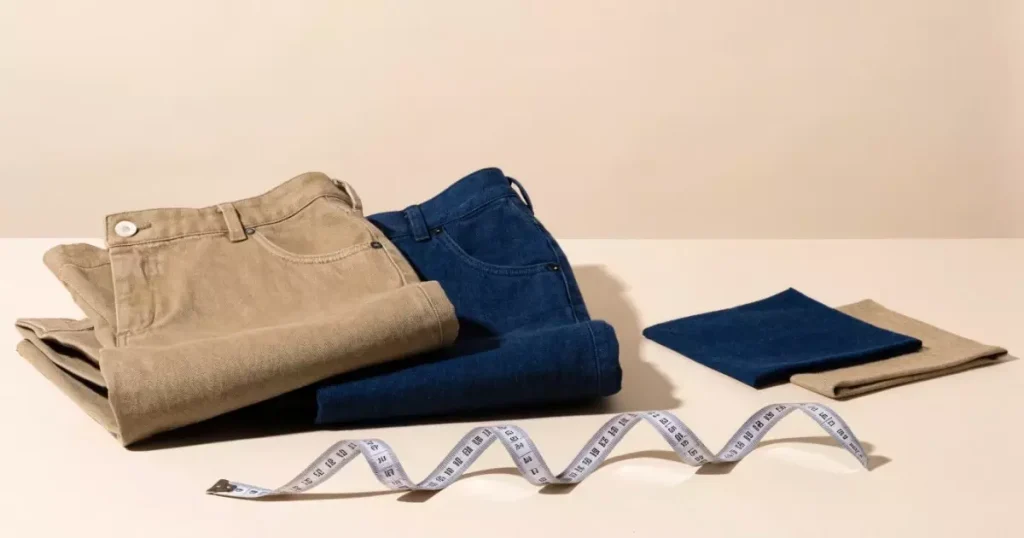
Measure your child’s waist, hip, and inseam, and write the numbers down. Use a soft measuring tape and keep it level. Compare those measurements with the retailer’s size chart, not just the age range. If your child is between sizes, check whether the trousers have an adjustable waist or a drawstring, and read the return policy before removing tags. Sizing labels vary by brand, so a size 10 in one school trouser line may not match a size 10 in another.
Tall and slim fit considerations
For tall and skinny girls, the fit question is often about length and waist together. Look for a size chart that lists both waist and inseam, and ask whether the style comes in slim or tall options. If only one size range is available, compare the garment’s rise and leg length with a pair that already fits. Do not assume an elastic waist solves a length problem, and do not assume a slim cut solves a waist problem. Confirm the return window so you can try more than one size without risk.
Adjustable and elastic waist features
Adjustable waists and elastic waists are useful features to compare, but they are not interchangeable. An adjustable inner tab lets you change the waistband circumference; a full elastic waist changes how the trouser sits and how formal it looks. Ask whether the school permits the style, then ask the retailer how the waist is constructed and whether the adjustability is internal or visible. A feature is only helpful if your child can use it comfortably and the school accepts it.
Elastic Waist, Unisex, and Jogger Options: Feature Checklist
Feature checklist
Use this table to compare school trousers on the points that affect daily wear and policy compliance.
Feature
Color
Leg style
Waistband
Closure
Pockets
Care label
Size range
Return policy
Why it matters
Schools may require a specific shade
Wide-leg, straight, and jogger cuts fit differently
Elastic and adjustable waists change fit and formality
Buttons, hooks, and zippers affect independence
Some children need pockets; some schools restrict them
Washing and drying affect how the trousers wear
Tall, slim, and plus sizes may not be available in every style
Fit problems are common with uniform shopping
What to verify
Ask for the school’s color name and the retailer’s color description
Check the dress code and the garment measurements
Confirm whether the school permits the style
Ask your child to try the closure before tags come off
Check the listing and the uniform policy
Read the label before purchase and keep it for reference
Compare waist and inseam measurements with the size chart
Confirm the window and condition requirements
Questions to ask before buying
Ask whether the trousers are allowed for everyday wear, whether the color matches the school’s requirement, and whether the waistband or jogger style is permitted. Ask the retailer whether the size chart refers to body measurements or garment measurements, whether the color is returnable, and whether the care label is available online. If the child is tall or slim, ask specifically about length options and adjustable waists. Keep the questions simple and get answers before checkout.
Care, Color, and Back-to-School Practicalities
Color and uniform matching
Khaki and navy are common choices, but matching can be harder than it looks. Order early, keep the packaging, and compare the trousers with the rest of the uniform in daylight if possible. If the school gives a color name or a preferred retailer, use that information before shopping elsewhere. Do not rely on a screen image alone, because monitor settings and product lighting can change how a color appears.
Care label checks
The care label is your best guide to washing and drying. A dry cleaner’s uniform care guide lists tips such as pretreating stains quickly, sorting and washing smartly, air-drying when possible, and ironing or steaming for a polished look. Treat these as general care suggestions and follow the garment label first. If a stain or fabric problem is serious, ask a professional cleaner rather than trying an aggressive remedy on a school uniform. See the uniform care tips
Back-to-school timing
Buy early enough to try the fit, wash the trousers once if the care label allows, and confirm the school’s requirements before the first wear. Keep receipts and packaging until you are sure. A cleaner’s fabric-care guidance suggests cold gentle washing for cotton and cool or warm water with mild detergent for polyester and blends, plus air-drying where possible. Check your own garment label, because those are general suggestions rather than a rule for every school trouser. Read the fabric care suggestions
How to Check School Uniform Policy and Buy Confidently
Policy questions to ask
Ask the school or uniform supplier these questions: Which colors are allowed? Are wide-leg, straight, jogger, or elastic-waist trousers permitted? Is a logo required or prohibited? Are shorts or skirts allowed instead? Does the policy distinguish between formal trousers and casual pants? Get the answer in writing if possible, such as an email or a link to the official dress code. A retailer’s product page is not a substitute for the school’s policy.
Retailer checks before checkout
Before you pay, confirm the size chart, the color description, the shipping cost, and the return window. Check whether the trousers can be returned if they have been tried on but not washed. Read the care label or ask for it. If the listing uses terms such as unisex, slim, or relaxed, ask what those terms mean in that brand’s measurements. Save the order confirmation and keep the packaging until your child has worn the trousers to school once.
School trousers are a practical purchase, not a guessing game. Start with the policy, measure your child, read the label, and keep the receipt. That routine will help you choose a pair that fits the school day and your family’s laundry routine.
FAQ
What should I check before buying school trousers?
Start with the school’s official dress code, then compare style, fabric and label details, fit and sizing, care needs, and retailer terms. Confirm allowed color, leg style, logo rules, and whether joggers or elastic waists are permitted.
How do I choose the right size for school trousers?
Measure your child’s waist, hip, and inseam, then compare those numbers with the retailer’s size chart instead of guessing from age. If your child is between sizes, check for an adjustable waist and review the return policy before removing tags.
What should I look for on the fabric and care label?
Check fiber content, care instructions, stretch, and any lining or waistband details. Read the care label for water temperature, drying method, and ironing guidance, and ask the retailer if the care label is not shown online.
What should tall or slim children look for in school trousers?
Look for a size chart that lists both waist and inseam, and ask whether the style comes in slim or tall options. Also confirm adjustable waist features and the return window so you can try more than one size if needed.
Are jogger-style or elastic-waist trousers always allowed?
No. Uniform rules vary, so ask whether jogger-style or elastic-waist trousers are permitted before buying. A casual jogger may not meet a formal trouser requirement, and elastic waists change fit and formality.
Tag: school trousers